
Holism With Rigor: How Doctoral Case Analysis Reads the Whole Person
Holism in natural health is often dismissed as vague or sentimental, but whole-person case analysis is rigorous academic work. It asks a practitioner to gather a full history across the physical, lifestyle, emotional, social, and environmental domains of a person’s life, to reason across many interacting factors at once, and to build a care plan that fits the whole of a particular life. This way of thinking has a serious academic lineage, from Engel’s biopsychosocial model to current whole person health research, and it can be studied at depth. KCNH educates natural health students and graduates who want to study whole-person practice with real academic depth.
A client arrives with a single complaint. Fatigue, say, that has lasted eight months. The presenting problem is one sentence long. The reason behind it almost never is. A practitioner working in the whole-person tradition knows that the fatigue sits inside a life: a sleep pattern, a diet, a stressed season, a history of illness, a home, a set of relationships, a nervous system that has been running hot for the better part of a year. The symptom is the doorway. The person is the room.
This way of working is often described, a little dismissively, as holistic. The word has softened over the years into something that sounds gentle and vague, a matter of good intentions and warm lighting.
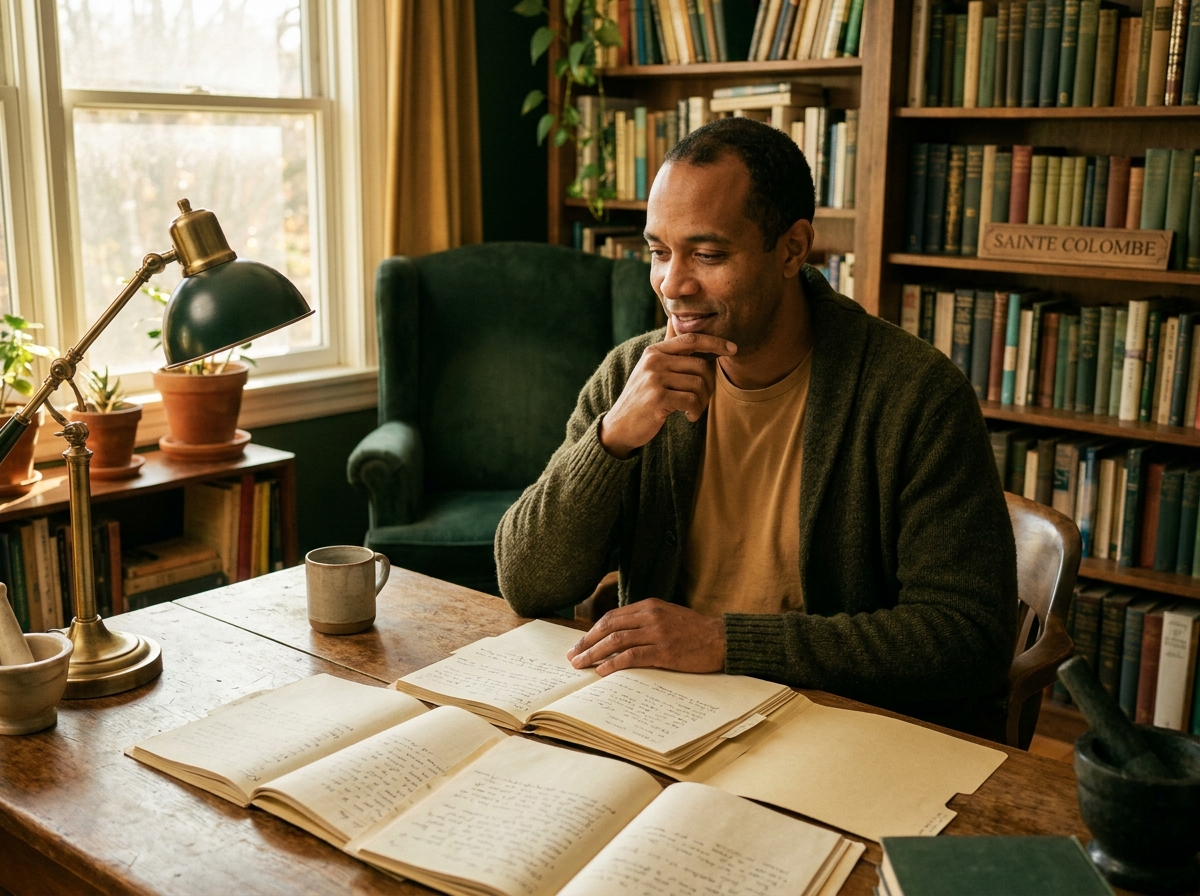
That reputation does the actual discipline a disservice. Whole-person analysis, done well, is one of the more demanding forms of reasoning a natural health practitioner ever takes on. It asks you to hold many interacting factors in view at once, to weigh them against one another, and to arrive at a plan that fits a real and complicated human being. There is nothing fluffy about it. It is rigor of a particular and difficult kind, and it can be studied the way any difficult thing is studied.

Why Holism Earned a Soft Reputation
The caricature did not appear from nowhere. For decades, whole-person language was used loosely, sometimes by people who meant care and connection and not a great deal more. Set beside the precision of a laboratory value or a named diagnosis, an approach that spoke of the whole person could sound unfalsifiable, more sentiment than method. The contrast was unfair, but it was understandable. A field that cannot say clearly what it does invites others to decide for it.
What the caricature misses is that holism is not the absence of analysis. It is a wider frame for it. A reductive approach narrows the field of view until a single variable can be isolated and named, which is a genuine strength when a problem really does live in one place. A whole-person approach widens the field deliberately, because it holds that many of the problems people actually bring to a practitioner do not live in a single variable. They live in the interaction between several. Sleep affects mood, mood affects eating, eating affects energy, energy affects movement, and the season of life underneath all of it shapes every one. To reason well about that web is not softer work than isolating a variable. It is harder, and it calls for a discipline of its own.
Holism Has a Serious Academic Lineage
The idea that care should address the whole person is not a fringe sentiment, and it is not new. In 1977 the physician George Engel proposed the biopsychosocial model, arguing that a scientific medicine had to account for psychological and social contributors to illness alongside the biological ones. It was a direct challenge to a purely reductive model, and it has shaped decades of thinking since. A systematic review of how whole person care is defined in the academic literature traces that lineage from Engel forward and shows how closely the terms holistic, whole person, and biopsychosocial have travelled together in the scholarship.
The interest has only deepened with time. At the national level, the National Center for Complementary and Integrative Health has built a research framework around whole person health, defining it as the care of the whole person rather than of separate organ systems, and organizing serious scientific investigation around exactly that premise. None of this reads as fluffy. It reads as a field working hard to study something genuinely complex with the discipline the complexity deserves.
For a student, this lineage matters more than it might first appear. It means that whole-person thinking can be approached the way any serious subject is approached: through reading, through models, through case after case, and through the slow accumulation of judgment. It is a body of knowledge with a history and a literature behind it, not a mood that a person either has or lacks.
What Doctoral Case Analysis Actually Asks Of You
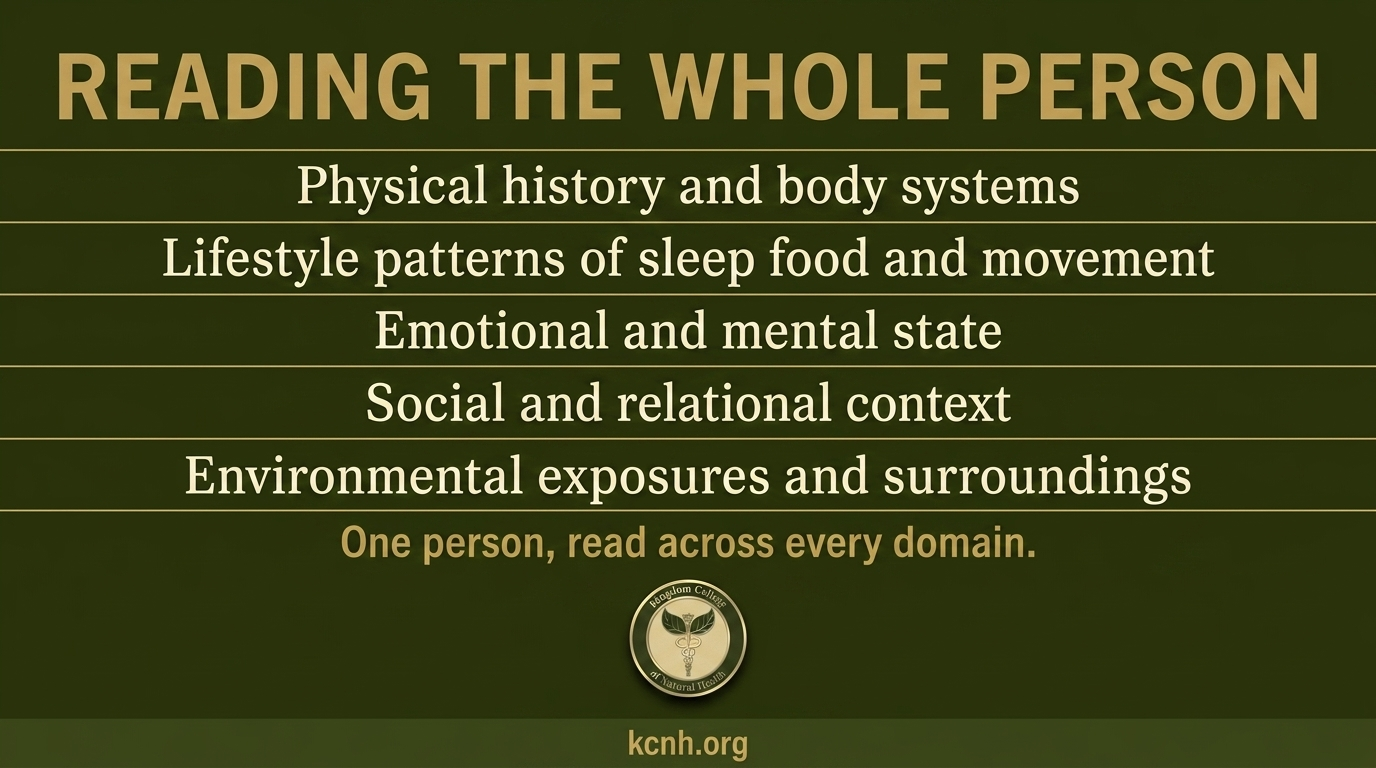
Strip the soft reputation away and look at what whole-person case analysis requires in practice, and the demand becomes obvious. It begins with gathering, and the gathering is wide. A full case history reaches across the physical and the historical, the daily patterns of sleep and food and movement, the emotional and mental weather of the person’s life, the social and relational context they live inside, and the environment that surrounds them. Each of these is a domain in its own right. Each can hold the factor that turns out to matter most, and none of them can be assumed away in advance.
Then comes the harder part, which is reasoning across all of it at once. The practitioner is not looking for one cause to name and be done. They are looking for the pattern that connects several findings, the thread that explains why this person, with this history, in this season, presents the way they do. That is an exercise in judgment under complexity. It rewards a disciplined mind and punishes a hurried one. It asks the practitioner to hold competing explanations open at the same time, to test each against the full picture, and to resist the pull toward the first tidy answer that happens to feel satisfying.
There is a discipline even to the gathering itself. A practitioner who asks only about the presenting complaint will hear only about the presenting complaint. Drawing out the rest, the sleep the person had stopped thinking about, the quiet stress they had decided was normal, the change in routine they never connected to anything, takes a deliberate and practiced hand. The information that matters most is often the information the client never thought to volunteer, because they had no reason to believe it was relevant. Learning to ask in a way that surfaces it, without leading the answer, is part of the craft, and it is learned rather than assumed.
At the doctoral level, this is studied as a discipline rather than picked up by instinct. Students work case after case, learning to organize a great deal of information into a coherent reading of a person, to notice what a narrower lens would miss, and to defend their reasoning rather than merely assert it. The skill is not mystical, and it is not a gift a person is simply born with. It is methodical, and like any methodical skill it grows with depth of study and considered practice.
A Case, Read Whole
Consider the eight-month fatigue from the opening, approached whole. The narrow reading looks for a single deficiency to correct and stops there. The whole-person reading keeps going. It notes that the fatigue began the same season a parent fell ill, that sleep has been broken since, that meals have become irregular and weighted toward quick sugar, that exercise stopped when the schedule collapsed, and that the person describes themselves as wired and tired at the same time. No single one of these explains the fatigue on its own.
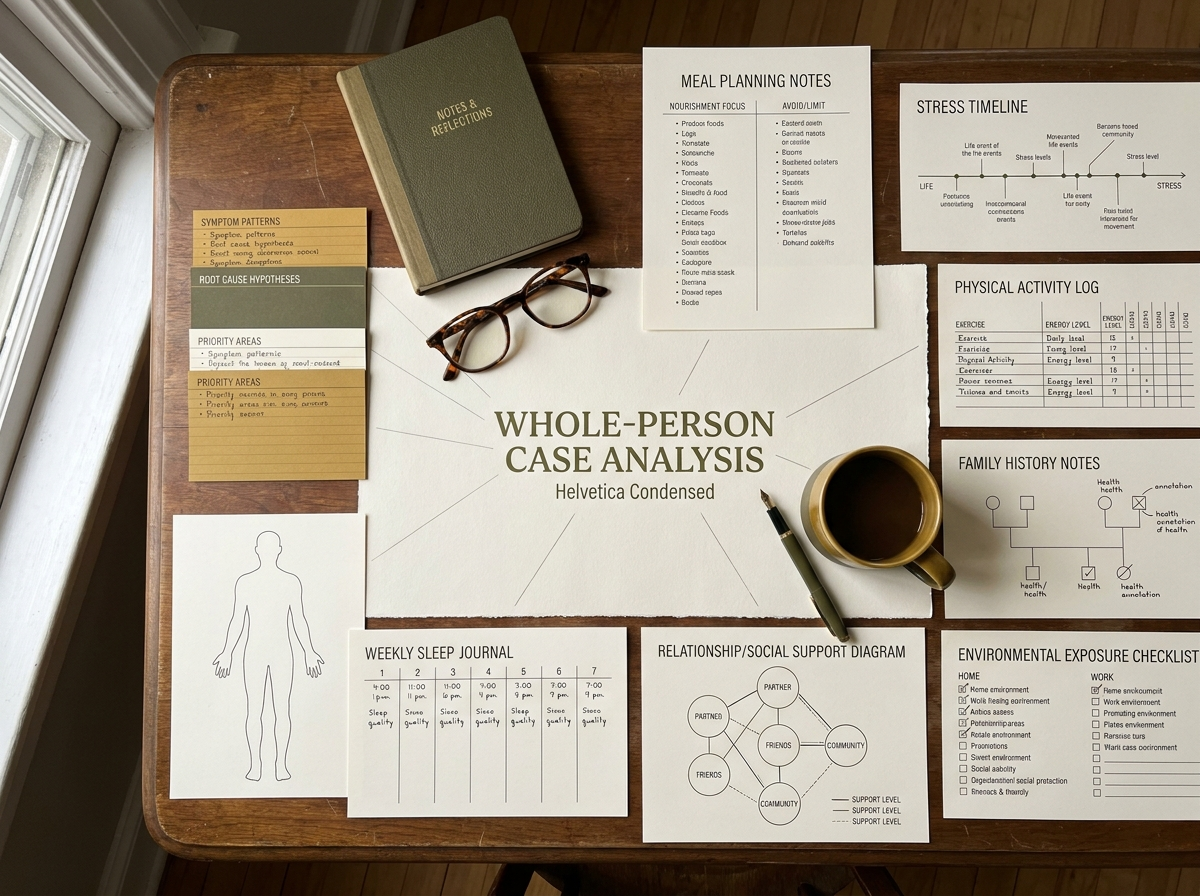
Together they describe a nervous system under sustained load, a sleep debt feeding a swing in blood sugar, and a set of habits in which each one quietly makes the next one worse.
Reading the case this way changes what counts as a finding. The irregular meals are not a side note; they are part of the mechanism. The broken sleep is not a complaint to soothe; it is a lever. The grief underneath the season is not outside the case at all; it may well be the center of it. A practitioner who had isolated a single variable would have missed the shape of the thing entirely. A practitioner who has learned to read the whole person sees a system, and a system, unlike a mystery, can be reasoned about and worked with in a deliberate order.
Care Planning That Fits the Whole Person
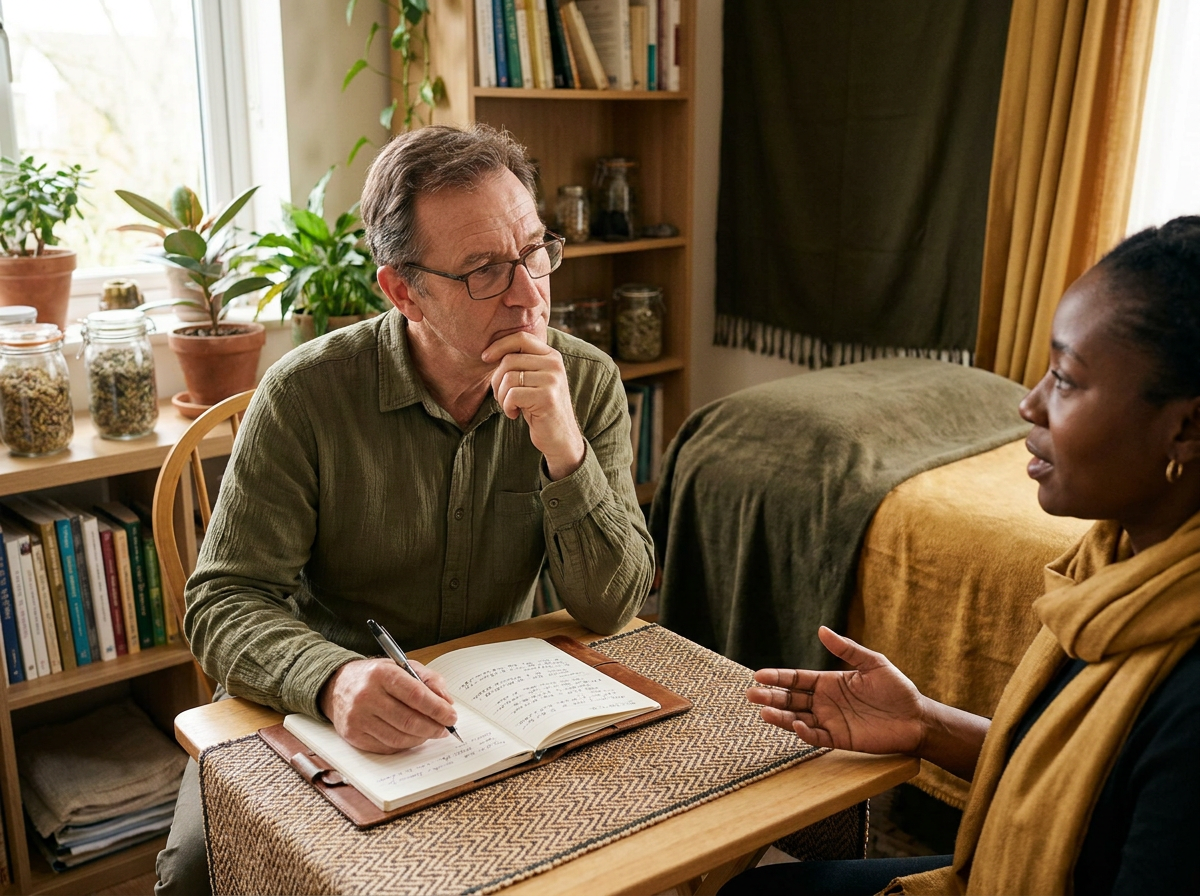
A reading of the person is only half the work. The other half is the plan, and whole-person care planning carries a rigor of its own. Once the practitioner understands how the factors interact, they have to decide where to begin, what to sequence, and what to set aside for later. A plan that tries to address everything at once usually addresses nothing well. A plan that fits the whole person accounts for the life it has to live inside: the time the person actually has, the changes they can realistically sustain, and the order in which improvements are likely to build on one another.
This is where the whole-person frame earns its keep. Because the analysis looked widely, the plan can be intelligent about trade-offs. It can choose the step that supports several domains at once. It can anticipate how a change in sleep might ease a change in eating, or how attention to a season of stress might unlock progress that adjusting nutrition alone could not.
Sequence is its own kind of judgment. Faced with the fatigue described earlier, a practitioner does not address sleep, diet, stress, and movement all in the same week and hope for the best. They decide what has to steady first for anything else to hold. Often that is sleep, because a rested person can sustain changes that an exhausted one cannot. Sometimes it is the season of grief, because little downstream will move while that remains unaddressed. Choosing the first move well, so that the second becomes easier rather than harder, is the part of planning that separates a list of good ideas from a plan a person can actually carry out.
Planning of this kind is taught and examined as a serious academic skill, held to the same expectation of reasoned justification that any rigorous discipline carries. The phrase reading the whole person, studied closely, turns out to describe something quite exact: care designed for the full reality of a particular life, and defended on the evidence of that life.
None of this is the work of a weekend. The capacity to read a person across many domains, to reason under complexity, and to plan care that fits a whole life is built slowly, through study that takes the subject as seriously as the subject deserves.
That is the real case for approaching holism academically rather than casually. It is not that the casual version is worthless. It is that the demanding version is where the genuine skill lives, and the demanding version has to be learned with depth and tested along the way.
KCNH was built for exactly that kind of depth. Since 1993 it has educated natural health students at the degree level, from Bachelor’s through Doctoral programs, approaching whole-person thinking as a discipline to be studied rather than a sentiment to be admired. For the student who already senses that the whole person is the real subject, the next step is to study it that way.
KCNH educates natural health students and graduates who want to study whole-person practice with real academic depth.